Ngày Văn hóa Việt Nam · Saigon Scene guide
Vietnam Culture Day
On 24 November 1946, President Hồ Chí Minh opened the First National Cultural Conference in Hanoi. Eighty years later the date is Vietnam’s newest public holiday. What it is, what’s on in Saigon, and the culture it celebrates, era by era.
Tue 24 Nov 2026 the first Culture Day, a paid day off
Is 24 November a day off?
Yes. Since National Assembly Resolution 28/2026/QH16 (passed 24 April 2026), 24 November is Vietnam Culture Day and workers get the day off on full pay. In 2026 that is Tuesday 24 November only: Monday the 23rd is a normal working day. Thirteen national sites are free that day, including the Independence Palace in Saigon.
What’s on in Saigon
Most of it happens on and around Nguyễn Huệ Walking Street, from the City Hall end to the river. Times come from the city’s plan and press reports up to 16 November; plans this new can move, so check on the day.
18 to 24 Nov
Culture and Great Unity Week
The city's programme across all 168 wards and communes, with free or discounted entry at state-run museums, relics and theatres (terms per venue not yet published).
City plan 556/KH-UBND
21 to 24 Nov, evenings
3D projection mapping on City Hall
Vietnamese and Saigon history projected onto the HCMC People's Committee building at the top of Nguyễn Huệ.
Planned
22 Nov, 19:00
Official opening and street dance party
On Nguyễn Huệ walking street, after a flower offering at the President Hồ Chí Minh statue at 18:30.
Reported 16 Nov
22 to 24 Nov, 08:00 to 22:00
Pavilions and stages on Nguyễn Huệ
Nón lá pavilions with film, theatre, crafts with artisans and VR heritage. Hát bội and cải lương on the 22nd, ethnic minority arts and đờn ca tài tử on the 23rd.
Reported 16 Nov
24 Nov, all day
Independence Palace is free
One of 13 national sites free on Culture Day under Circular 167/2026/TT-BTC.
Confirmed
24 Nov, 19:30 and 21:00
Live TV show, then fireworks
A live televised show from Nguyễn Huệ at 19:30, then fireworks planned for 21:00 to 21:15 from the Saigon River tunnel entrance in An Khánh ward. Earlier plans said 20:00, so check on the day.
Reported 16 Nov
18 Nov to 6 Dec
Áo dài and heritage photos on Book Street
An áo dài exhibition and the photo show “Sài Gòn: Dấu ấn di sản” on Nguyễn Văn Bình Book Street, beside the Central Post Office.
Reported 15 Nov
Vietnamese culture, era by era
Twenty-five moments, from the first stone tools to the first Culture Day, each with something you can still see, hear or eat in Saigon.
c. 10,000 to 2,000 BCE · Stone Age
Hunter-gatherers of the Hòa Bình culture
The Hoabinhian stone-tool tradition takes its name from Hòa Bình province, where French archaeologists first described it in rock shelters of northern Vietnam. It belongs to hunter-gatherers who lived across mainland Southeast Asia from roughly 10,000 to 2,000 BCE, long before rice farming and bronze.
In SaigonBegin at the HCMC History Museum (Bảo tàng Lịch sử TP.HCM, 2 Nguyễn Bỉnh Khiêm, inside the Saigon Zoo grounds), Saigon's first museum, opened in 1929 as the Musée Blanchard de la Brosse.
c. 1000 BCE to 1st century CE · Bronze Age
Đông Sơn and the bronze drums
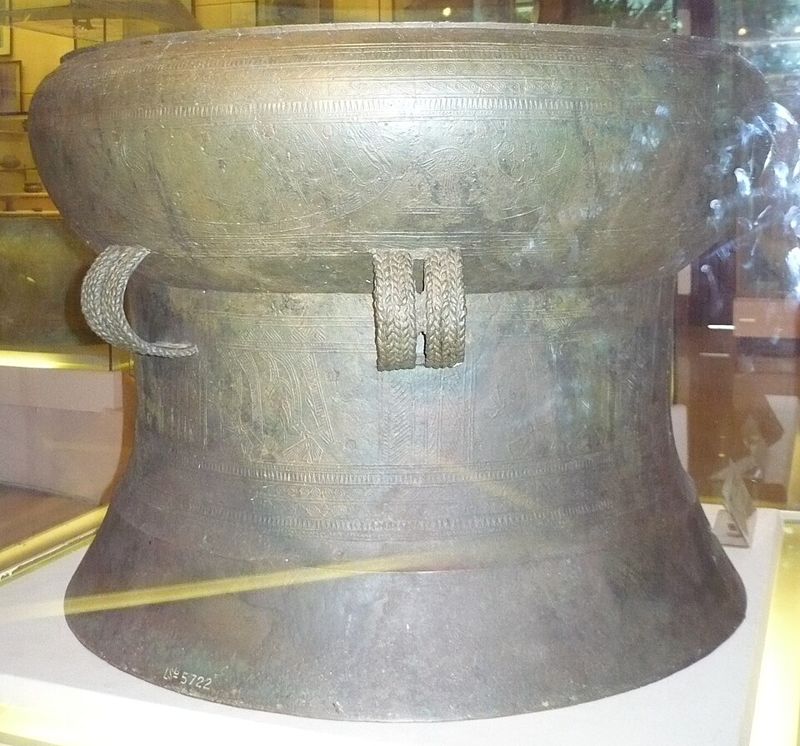
The Đông Sơn culture of the Red River Delta grew rice, kept buffalo and cast bronze, most famously the great drums decorated with a central sun-star, flying birds, feathered dancers and boats. The first drums were excavated in Thanh Hóa in 1924, and Vietnamese historians link the culture to the early states of Văn Lang and Âu Lạc.
In SaigonThe HCMC History Museum's 'Đồng vọng' exhibition showed more than 150 Đông Sơn artefacts from 27 January to 31 March 2026 (now closed). The drum's sun-star is the most recognisable ancient Vietnamese motif and is safe to redraw.
VuThiAnh, Public domain, via Wikimedia Commons Legendary era · Founding legends
The Hùng Kings
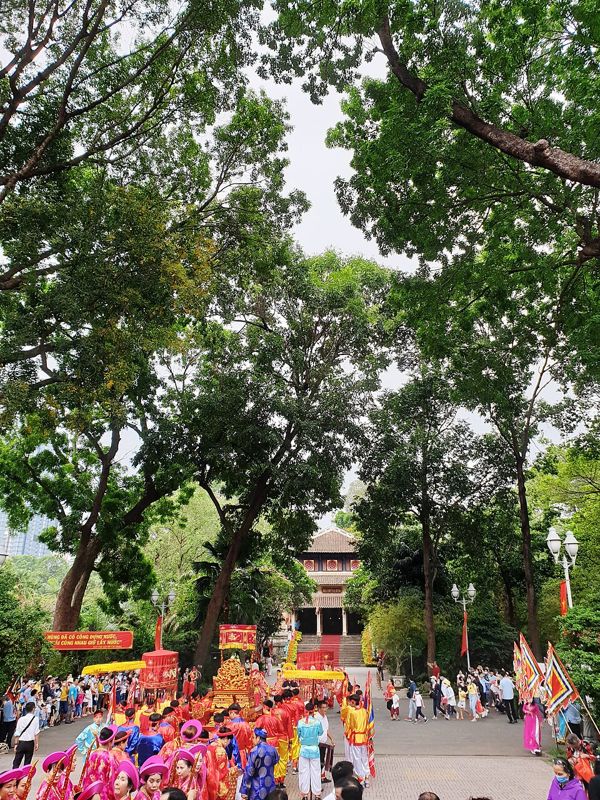
Vietnamese tradition traces the nation to the Hùng Kings of Văn Lang, honoured each year on the 10th day of the 3rd lunar month, now a national public holiday. UNESCO inscribed the worship of the Hùng Kings in Phú Thọ on its Representative List in 2012.
In SaigonHCMC holds its own Hùng Kings ceremony at the Hùng Kings Temple in the Saigon Zoo grounds, a French-era building (dated 1926 in one source, 1929 in another) that began life as a memorial.
Phương Huy, CC BY-SA 4.0, via Wikimedia Commons c. 1000 BCE to 200 CE · Iron Age
Sa Huỳnh and the jar burials of Cần Giờ
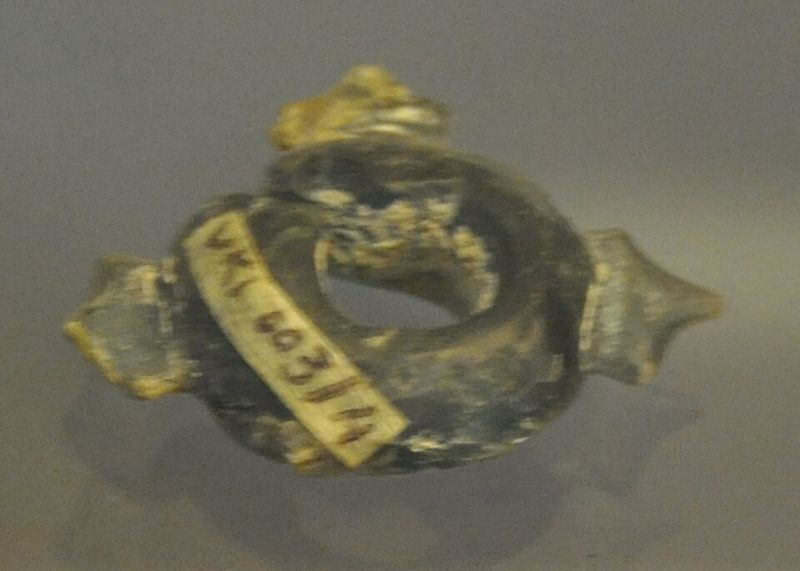
The Sa Huỳnh culture of central and southern Vietnam worked iron, buried its dead in lidded jars and made distinctive earrings with two animal heads, in jade and glass. Its people were most likely ancestors of the Cham.
In SaigonInside today's HCMC, the Giồng Cá Vồ site in Cần Giờ's mangroves has yielded hundreds of burial jars (224 in one excavation pit) dated to about 2,300 to 2,200 years ago, with Sa Huỳnh-style earrings.
HappyMidnight, CC BY-SA 3.0, via Wikimedia Commons 1st to 7th century CE · Funan and Óc Eo
Óc Eo, the Mekong Delta's ancient port
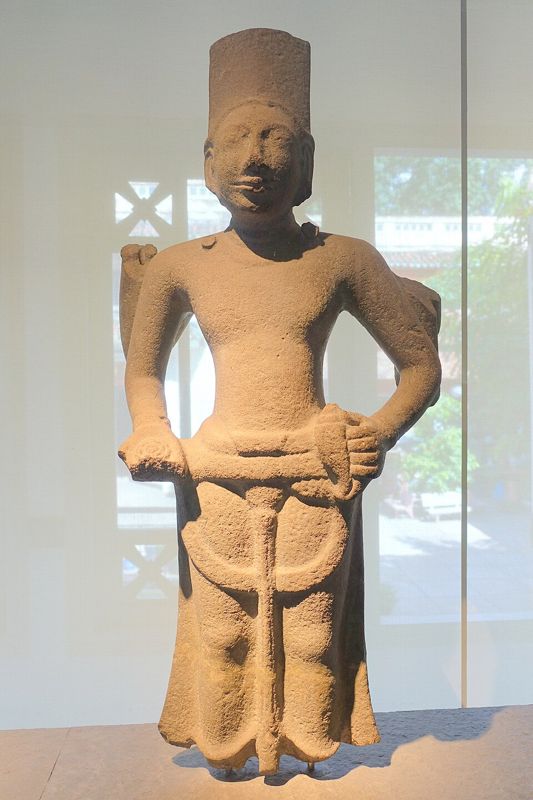
Chinese records describe a kingdom called Funan in the Mekong Delta from the 1st century CE. Its archaeological trace is the Óc Eo culture, named after a 450-hectare site in today's An Giang that French archaeologist Louis Malleret began excavating on 10 February 1942. Who the Funanese were is still debated by scholars.
In SaigonSandstone Vishnu statues and gold jewellery from Óc Eo sites in An Giang and Long An are on display at the HCMC History Museum.
Daderot, CC0, via Wikimedia Commons 2nd century to 1832 · Champa
The Cham kingdoms of the central coast
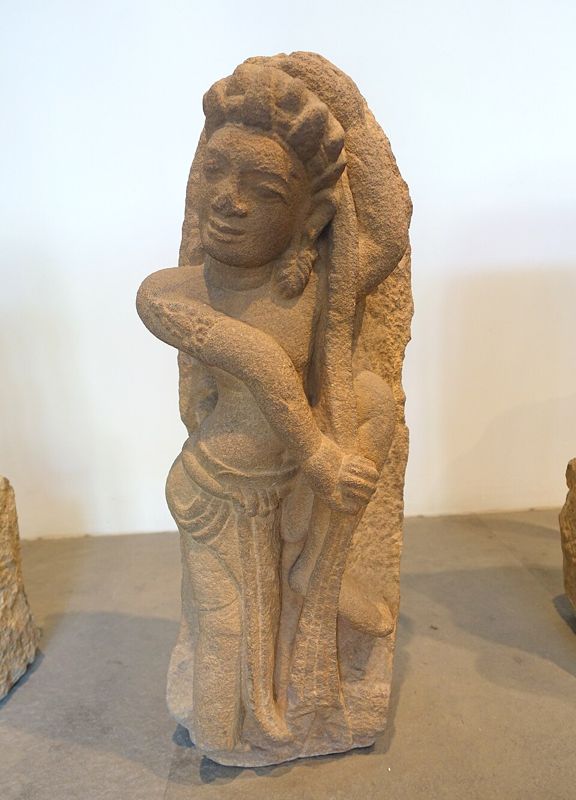
Champa was a group of Austronesian, Cham-speaking polities along the central coast, preceded by Lâm Ấp from 192 CE. It peaked in the 9th and 10th centuries, left the Mỹ Sơn sanctuary (a World Heritage Site since 1999) and its last territory was absorbed by the Nguyễn court in 1832. The Cham remain one of Vietnam's 54 ethnic groups, and Cham pottery-making was inscribed by UNESCO in 2022.
In SaigonThe HCMC History Museum has a Champa sculpture room; the 10th-century sandstone dancers from Trà Kiệu are a highlight.
Daderot, CC0, via Wikimedia Commons 40 to 43 CE · Chinese rule
The Trưng sisters' uprising
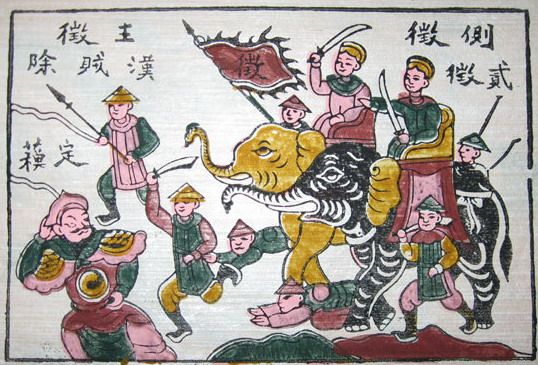
During roughly a thousand years of Chinese rule, Trưng Trắc and Trưng Nhị led a rebellion in 40 CE against the Han governor and ruled for about three years before Han forces returned. They are honoured as national heroines and remain a favourite subject of folk prints.
In SaigonHai Bà Trưng Street, one of central Saigon's main roads, is named after them.
own photo, Public domain, via Wikimedia Commons 938 · Independence
Ngô Quyền wins at the Bạch Đằng River
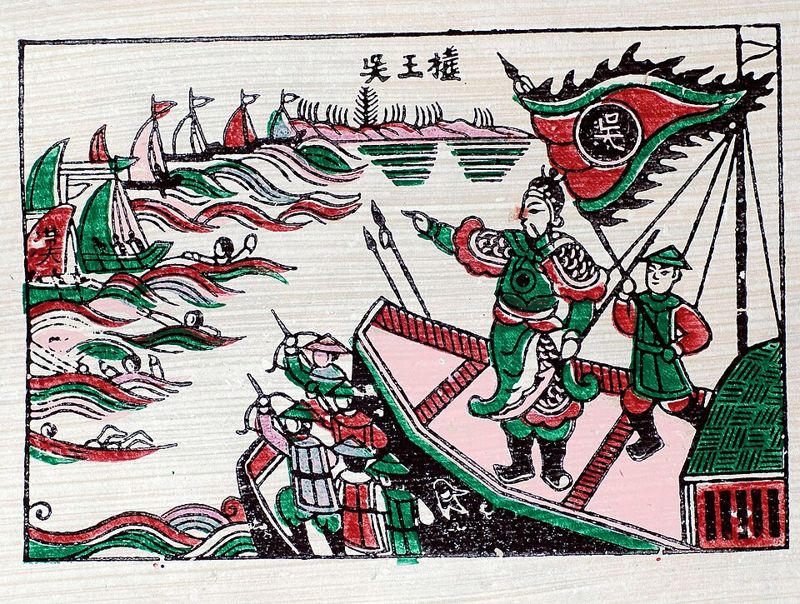
In late 938, Ngô Quyền defeated a Southern Han fleet at the Bạch Đằng River near Hạ Long Bay, ending the long period of Chinese rule. Vietnamese historians treat the battle as the turning point towards lasting independence.
In SaigonSaigon's riverside Bạch Đằng Wharf (Bến Bạch Đằng) and Ngô Quyền Street both carry the names of the battle and its victor.
Unknown artisan from the village of Dong Ho., Public domain, via Wikimedia Commons 1010 to 1225 · Lý dynasty
Thăng Long, the Temple of Literature and water puppets
The Lý dynasty moved the capital to Thăng Long (today's Hanoi) in 1010 and founded the Temple of Literature in 1070. Water puppetry, performed on a pool with hidden puppeteers, dates back as far as the 11th century in the villages of the Red River Delta.
In SaigonWater puppet shows are staged for visitors in Saigon as well as Hanoi.
Daderot, CC0, via Wikimedia Commons 1225 to 1400 · Trần dynasty
Mongol defeats and Trúc Lâm Zen
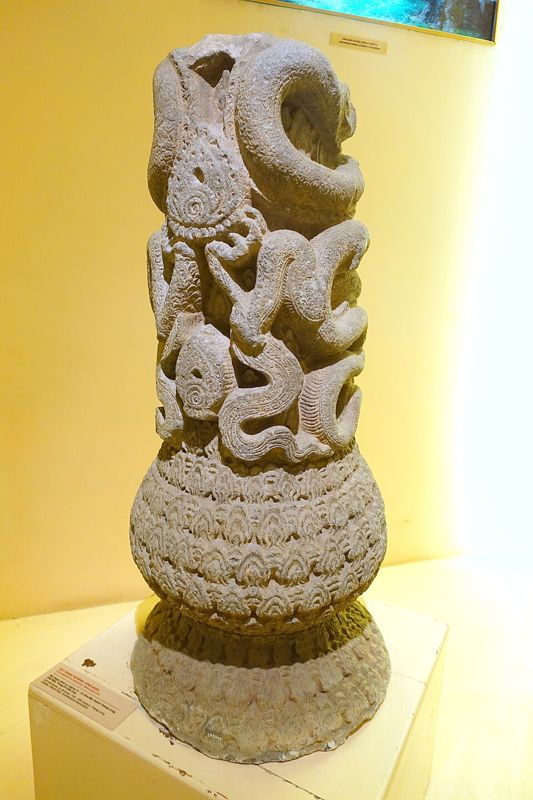
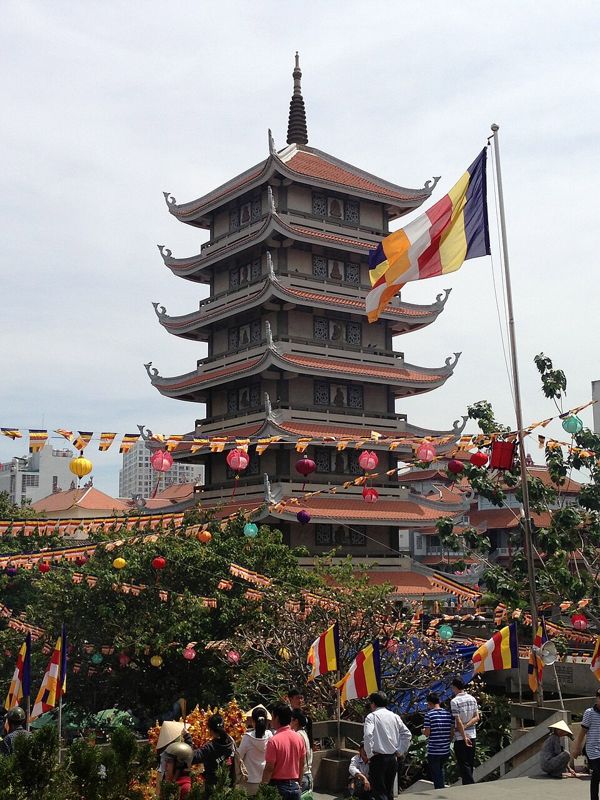
The Trần dynasty repelled three Mongol invasions in the 13th century, and Emperor Trần Nhân Tông founded the Trúc Lâm school of Zen Buddhism. The period produced the first literature in chữ Nôm, the Vietnamese demotic script. In 2025 UNESCO inscribed the Yên Tử, Vĩnh Nghiêm, Côn Sơn and Kiếp Bạc complex, the heart of Trúc Lâm, as Vietnam's 9th World Heritage Site.
In SaigonVĩnh Nghiêm Pagoda on Nam Kỳ Khởi Nghĩa takes its name from the northern Vĩnh Nghiêm pagoda that is now part of that World Heritage complex.
trungydang, CC BY 3.0, via Wikimedia Commons 15th to 17th century onwards · Lê dynasty
Đông Hồ and Hàng Trống folk prints
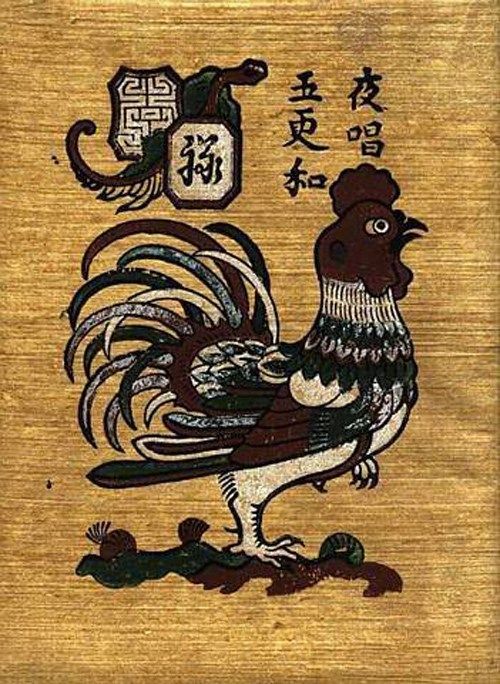
Đông Hồ village in Bắc Ninh prints woodblock pictures on paper coated with crushed seashell, bought for Tết and showing pigs, roosters, carp and village scenes; researchers date the craft to at least the early 17th century, villagers say earlier. Hanoi's Hàng Trống prints are hand-coloured over a printed outline. UNESCO put the Đông Hồ craft on its Urgent Safeguarding List on 9 December 2025, Vietnam's 17th intangible heritage element.
In SaigonLook for Đông Hồ prints at Tết markets and craft stalls; the 22 to 24 November 2026 craft-village space on Nguyễn Huệ walking street lets visitors make craft products with artisans.
Unknown artisan from the village of Dong Ho., Public domain, via Wikimedia Commons 1651 · Writing
The Latin alphabet arrives: chữ Quốc ngữ
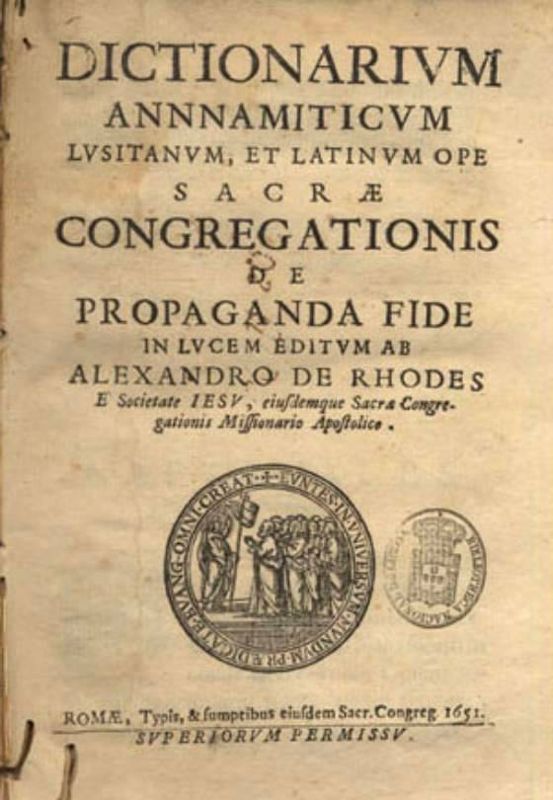
Jesuit Alexandre de Rhodes published a Vietnamese, Portuguese and Latin dictionary in Rome in 1651 with about 8,000 Vietnamese entries, consolidating the romanised script now called chữ Quốc ngữ. It only displaced Chinese characters and chữ Nôm after the French conquest from 1858.
In SaigonSaigon was where the script went mainstream: the first Quốc ngữ newspaper was printed here in 1865 (see below).
Alexandre de Rhodes, Public domain, via Wikimedia Commons 1698 · Nguyễn lords
Nguyễn Hữu Cảnh founds Gia Định
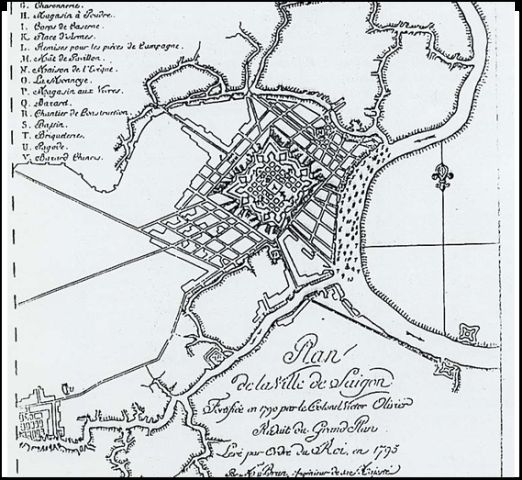
In 1698 Lord Nguyễn Phúc Chu sent Nguyễn Hữu Cảnh south to organise the land; he set up Gia Định prefecture with two districts, Phước Long and Tân Bình. HCMC dates its own founding to 1698, and the city marked 327 years in 2025. A star-shaped citadel was built in Saigon in 1790.
In SaigonNguyễn Hữu Cảnh Street, running along the Saigon River in Bình Thạnh, carries his name.
Creator was a French officer named Le Brun (as described in the book Ký ức lịch sử về Sài, Public domain, via Wikimedia Commons Centuries before and after 1698 · Southern peoples
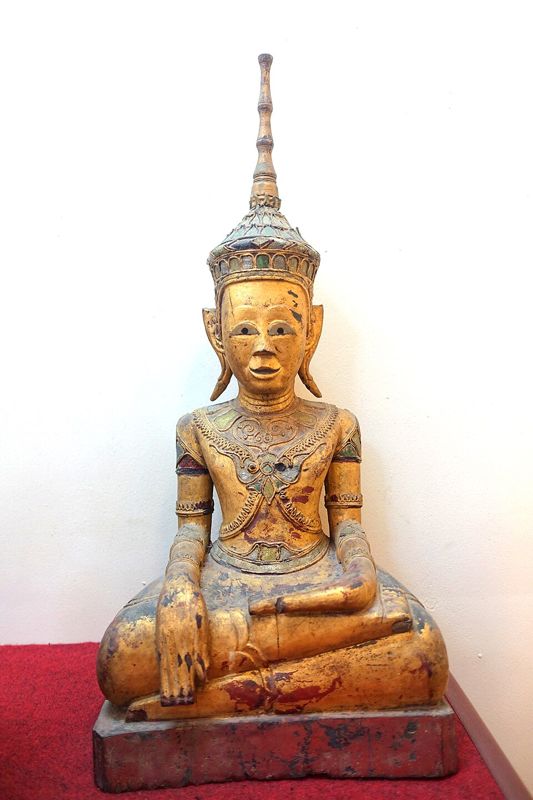
Khmer heritage in the Mekong Delta
Long before Vietnamese settlement, the lower Mekong was home to Khmer communities, whose Theravada Buddhist temples, festivals and arts are still central to delta life. The Khmer are one of Vietnam's 54 officially recognised ethnic groups; HCMC itself is home to people from 53 minority groups.
In SaigonThe HCMC History Museum shows Khmer Buddhist wood carving, and the Chantarangsay Khmer Theravada temple stands in central Saigon.
Daderot, CC0, via Wikimedia Commons Late 18th century · Chinese communities
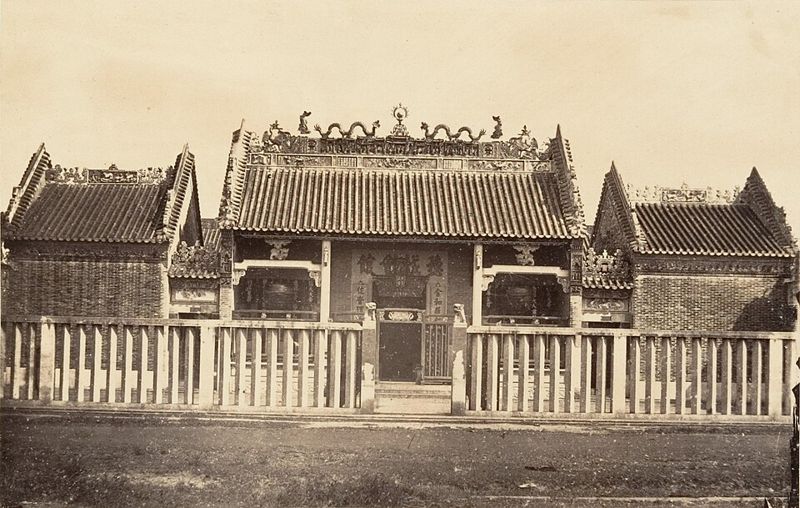
Chợ Lớn, the big market
Chinese settlers, including the Minh Hương, were trading in the area before 1698. After Tây Sơn forces devastated the Chinese trading town at Cù lao Phố (Biên Hòa) in 1776, many moved to what became Chợ Lớn, which grew into the south's great commercial hub. Sources differ on exact dates.
In SaigonThe Thiên Hậu temple (Tuệ Thành assembly hall) at 710 Nguyễn Trãi was listed as a national monument in 1993; a bell inside is dated 1830, and Trịnh Hoài Đức's gazetteer of about 1820 already mentions it.
Emile Gsell, Public domain, via Wikimedia Commons 1802 to 1945 · Nguyễn dynasty
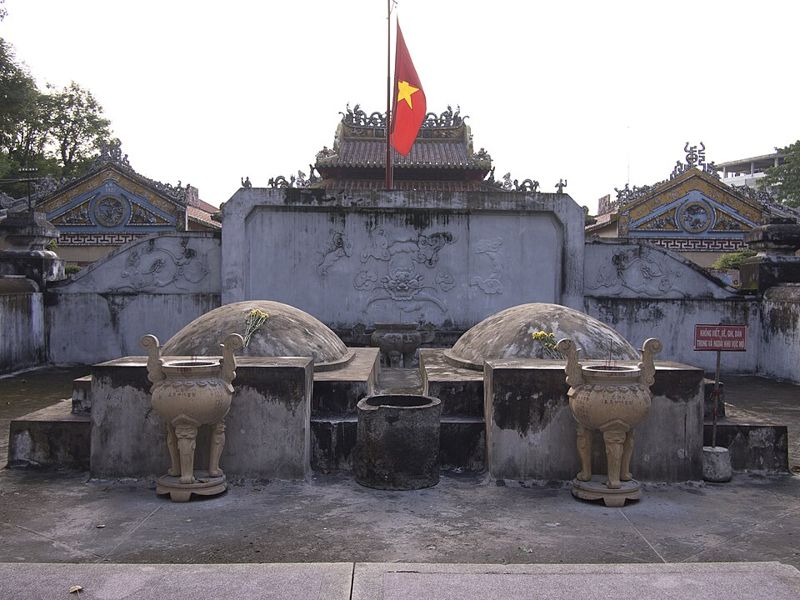
The last dynasty and the viceroy of the south
Gia Long founded the Nguyễn dynasty in 1802 and ruled from Huế, whose monuments became Vietnam's first World Heritage Site in 1993. In the south, Marshal Lê Văn Duyệt governed from the Saigon citadel and died there on 3 July 1832.
In SaigonLê Văn Duyệt's tomb and temple, known as Lăng Ông Bà Chiểu, still stands in Bình Thạnh.
vi:User:Tokeisan, Public domain, via Wikimedia Commons Early 19th century · Literature
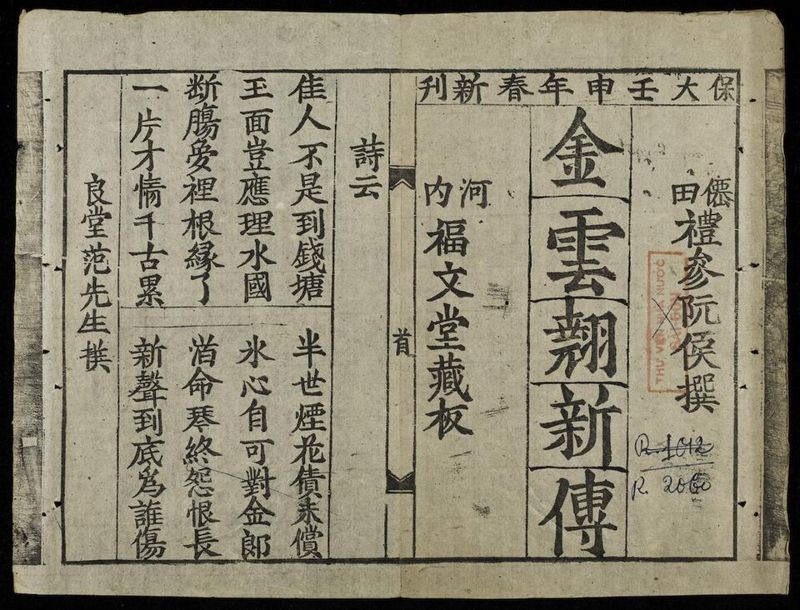
Nguyễn Du's Tale of Kiều
Nguyễn Du (1765 to 1820) wrote Truyện Kiều, 3,254 lines in six-eight lục bát verse, about a gifted young woman who sacrifices herself for her family. It is the best-loved work of Vietnamese literature and has been translated into some 20 languages.
In SaigonKim Vân Kiều was also the play staged in Mỹ Tho in 1918 that is most often cited as the birth of cải lương, the south's own theatre.
Nôm Foundation, Public domain, via Wikimedia Commons 1859 to 1945 · French colonial period
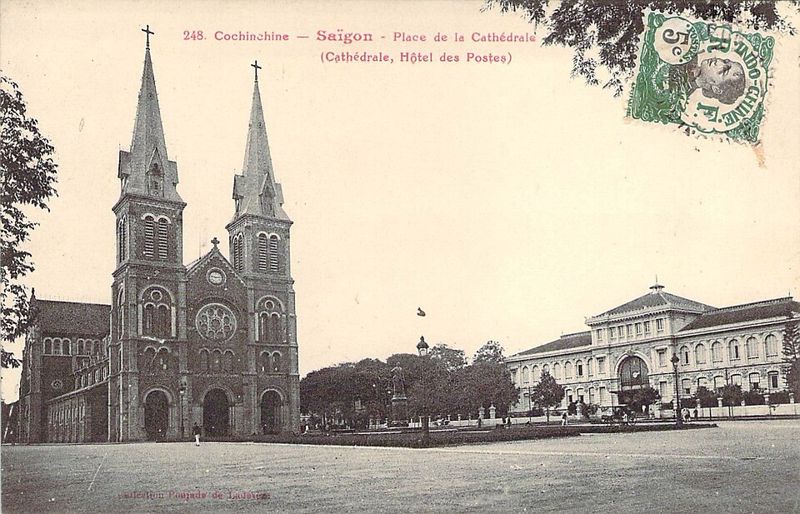
Colonial Saigon takes shape
French forces took Saigon in 1859 and made it the capital of Cochinchina. The red-brick cathedral, built with bricks from Toulouse, was completed in 1880, followed by the post office, the Municipal Theatre and the Hôtel de Ville.
In SaigonWalk Đồng Khởi from the cathedral to the Opera House; the old Hôtel de Ville, now the HCMC People's Committee, hosts the 3D mapping show from 21 to 24 November 2026.
Unknown author, Public domain, via Wikimedia Commons 1865 · Print
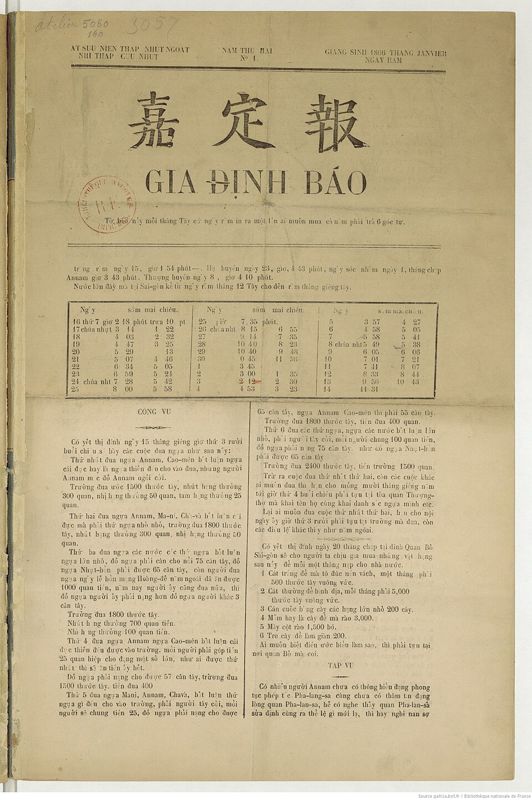
Gia Định Báo, the first Quốc ngữ newspaper
Gia Định Báo, the first newspaper printed in chữ Quốc ngữ, published its first issue in Saigon on 15 April 1865. Scholar Trương Vĩnh Ký later took charge of it.
In SaigonSaigon Book Street (Đường sách Nguyễn Văn Bình) runs 'Văn hóa Việt Nam qua những trang sách' from 18 November to 6 December 2026.
Paulus Cua, Public domain, via Wikimedia Commons Late 19th century · Southern music
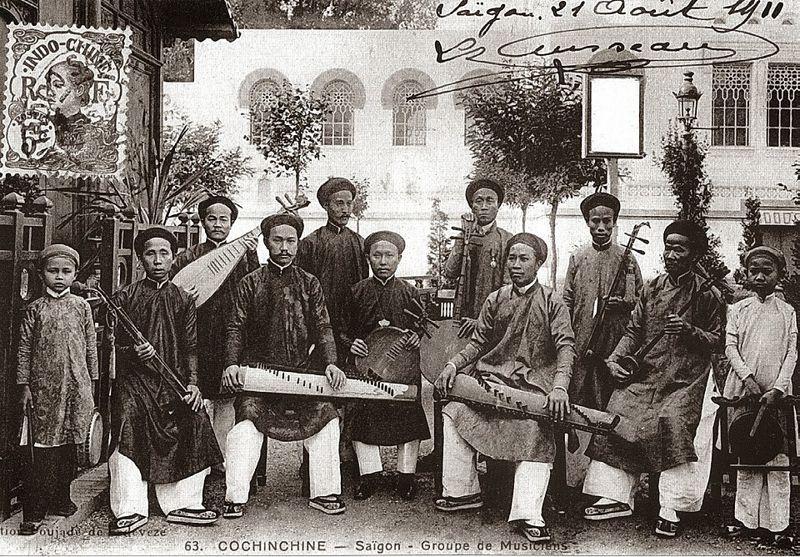
Đờn ca tài tử, the south's chamber music
Đờn ca tài tử is the amateur chamber music of southern Vietnam, played on instruments such as the đàn tranh zither, moon lute and spike fiddle, with improvised ornament. UNESCO inscribed it in 2013.
In SaigonNguyễn Huệ's 'Quảng trường sắc màu Việt Nam' stage features ethnic arts and đờn ca tài tử on 23 November 2026, 18:00 to 21:45.
không rõ, Public domain, via Wikimedia Commons 1918 · Southern theatre
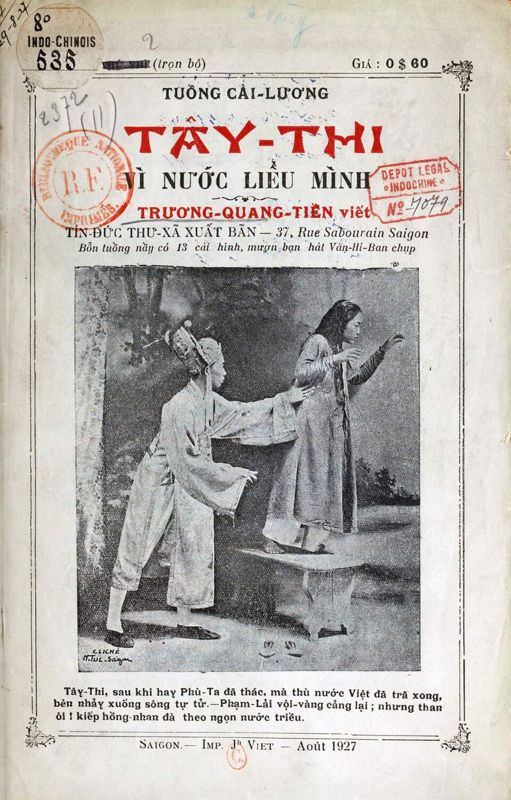
Cải lương is born in the Mekong Delta
Cải lương ('reformed theatre') blends southern folk song, tài tử music, classical hát bội and spoken drama. It is most often dated to a performance of Kim Vân Kiều in Mỹ Tho on 15 August 1918, though some scholars argue for 1916 or 1917; it flourished in Saigon from the 1930s.
In SaigonHát bội and cải lương fill the Nguyễn Huệ stage on 22 November 2026, 18:00 to 21:45, and the city plan includes a special cải lương tuồng cổ night.
Collective and uncredited work., Public domain, via Wikimedia Commons 1930s · Fashion
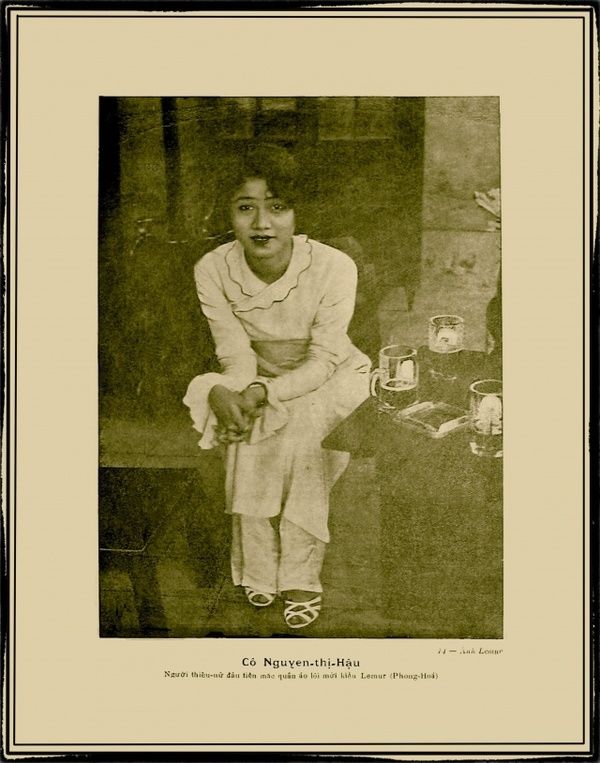
The modern áo dài
Painter Nguyễn Cát Tường, whose shop was called Le Mur, redesigned the long tunic as a close-fitting women's garment in the 1930s, promoted through the Hanoi weeklies Phong Hóa and Ngày Nay. That 'Lemur' cut is the ancestor of today's áo dài.
In SaigonAn áo dài exhibition inspired by quan họ, ví giặm and đờn ca tài tử is part of the Saigon Book Street programme (18 November to 6 December 2026), and áo dài are showcased on the Nguyễn Huệ community stage.
Musée Annam, Public domain, via Wikimedia Commons 1950s · Street food
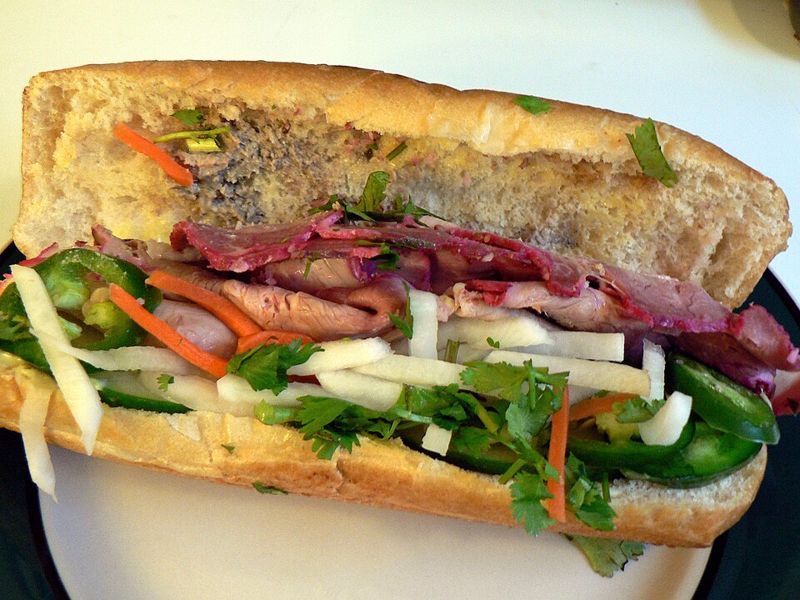
Saigon invents the bánh mì
The baguette arrived with the French, but a distinctly Vietnamese sandwich took shape in 1950s Saigon. After the 1954 partition, migrants from the north opened bakeries such as Hòa Mã, which in 1958 became one of the first shops to sell bánh mì thịt.
In SaigonHòa Mã still sells bánh mì in the old District 3.
Stu Spivack, CC BY-SA 2.0, via Wikimedia Commons 1945 to 1976 · Independence and reunification
Independence, a culture conference and reunification
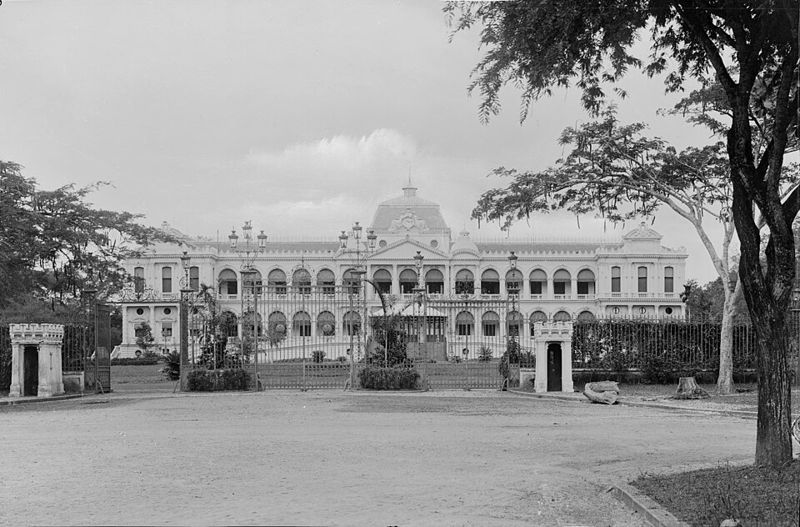
President Hồ Chí Minh read the Declaration of Independence on 2 September 1945, and on 24 November 1946 he opened the First National Cultural Conference in Hanoi, the date now chosen for Vietnam Culture Day. After decades of war, the country was reunified in 1975 and Saigon was renamed Ho Chi Minh City in 1976.
In SaigonThe Independence Palace (Dinh Độc Lập), designed by architect Ngô Viết Thụ and inaugurated in 1966, is free to visit on 24 November under Circular 167/2026/TT-BTC.
Salles, André (1860-1929), Public domain, via Wikimedia Commons 1986 to 2026 · Today
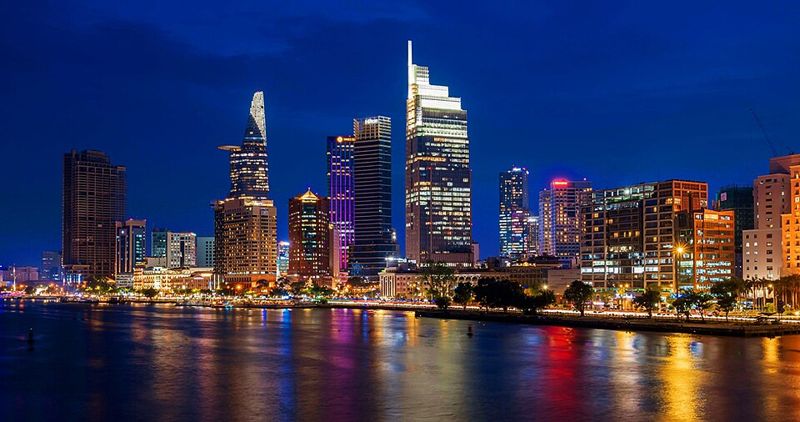
From Đổi Mới to the first Vietnam Culture Day
The Đổi Mới reforms launched in December 1986 opened the economy, and with it a boom in film, music, design and food culture. On 24 April 2026 the National Assembly made 24 November Vietnam Culture Day, a paid day off from 2026, with a national target of cultural industries reaching 7% of GDP by 2030.
In SaigonOn 24 November 2026, Nguyễn Huệ walking street hosts a live televised art show from 19:30 and the city plans fireworks at 21:00 from the Saigon River tunnel entrance in An Khánh ward.
Tran Van Ngoc, CC0, via Wikimedia Commons


Culture in numbers
Sources: UNESCO World Heritage and intangible heritage lists (16 Nov 2026), Vietnam News Agency (8 Nov 2026), VCCI (7 Sep 2026), Báo Văn hóa (19 Dec 2025), Resolution 28/2026/QH16, the cultural industries strategy to 2030 (Báo Văn hóa, 16 Nov 2025).
Vietnam Culture Day: questions answered
Is 24 November a public holiday in Vietnam?
Yes, from 2026. National Assembly Resolution 28/2026/QH16, passed on 24 April 2026 and in force from 1 July 2026, made 24 November Vietnam Culture Day with a paid day off for workers. In 2026 the government approved one day only, Tuesday 24 November, with no swapped days, so Monday 23 November is a normal working day. Some private employers have swapped days to give a longer break.
Why 24 November?
On 24 November 1946 the First National Cultural Conference opened at the Hanoi Opera House, attended by President Hồ Chí Minh and more than 200 cultural figures. His message there is widely quoted as “Văn hóa phải soi đường cho quốc dân đi”, which we translate as “Culture must light the way for the nation”. 2026 is the 80th anniversary.
Is Vietnam Culture Day the same as Vietnam Cultural Heritage Day?
No. Vietnam Cultural Heritage Day is 23 November and is not a day off. It marks Decree 65/SL of 23 November 1945 on preserving the country's relics. Culture Day, 24 November, is the new public holiday.
Are museums free on Vietnam Culture Day?
Thirteen national museums, relics and national parks are free on 24 November under Circular 167/2026/TT-BTC. In Ho Chi Minh City that includes the Independence Palace. State-run museums, relics and theatres in the city also offer free or discounted tickets from 18 to 24 November, but the terms per venue had not been published when we checked.
What is on in Ho Chi Minh City for Culture Day 2026?
The city runs a Culture and Great Unity Week from 18 to 24 November, centred on Nguyễn Huệ walking street: an opening on 22 November at 19:00, stages and pavilions from 22 to 24 November, 3D projection mapping on the City Hall facade from 21 to 24 November, a live televised show at 19:30 on 24 November and fireworks planned for 21:00 from the Saigon River tunnel entrance in An Khánh ward.
Will 24 November be a holiday every year?
Yes. The resolution sets 24 November as Vietnam Culture Day each year. How the day off falls (swapped days or not) is decided each year by the government.
Use these illustrations
The line drawings on this page were made for Saigon Scene and are free to reuse under CC BY 4.0: credit “Illustration: Saigon Scene” with a link to this page. Schools and journalists can email hello@saigon-scene.com for the full-size files. Archive images keep their own licences, shown under each one.
How we checked: every date and figure comes from Vietnamese government sources, the National Assembly’s text and named Vietnamese and English-language press, read between 13 and 16 November 2026. Quotes from Vietnamese are our translations. We are an independent guide, not part of the official programme.